In conformity with our philosophy of Creating Shared Value, we have continued to magnify our social impact by leveraging the full power of our business to work with different stakeholders and contribute to a more resilient and stable economy.
By creating manifold economic opportunities, providing access to finance and innovation, and adapting to the needs of the marketplace and the local economy, we have made significant strides under this pillar.
By creating manifold economic opportunities, providing access to finance and innovation, and adapting to the needs of the marketplace and the local economy, we have made significant strides under this pillar.
Switching to FLEXCUBE
Switching to a completely new core banking system was not
an easy decision. Many aspects were at stake and needed
consideration. Following several consultations and evaluations,
Bank Audi acquired one of the best breeds in core banking:
Oracle FLEXCUBE. The Bank made sure to focus on its key
requirements while doing its best to least affect customers.
For the past 3 years, a joint team from Bank Audi and Oracle
worked on all stages in order to make it happen. It was time for
an updated core banking system that includes all of Bank Audi’s
business requirements and that could take us to the next level
in the 21st century.
“70% of core banking implementations globally either stop or
exceed the set budget and time. The Bank made sure to stay on
time and within budget”, Toufic Arida, Assistant COO and Head
of Transformation Office.
“One of the early challenges was adapting to Oracle FLEXCUBE and not replicating our old system”, Dalia Tohme, Senior Change Manager – Transformation Program Office.
“The customer experience always comes first. However, the system should not disrupt the operational aspect of the Bank’s branches”, Dania Abou Zeinab, CASA-TD Stream Lead.
In order to transfer and load the Bank’s data onto the new system, a technical infrastructure environment needed preparation. A rollout process was carried out based on a well-thought-out plan where every person knew their duty and the precise timing of fulfilling their tasks. “Banks usually make changes step by step. In this case, Bank Audi wanted the transition to happen altogether. In fact, the Bank created a transformation office that helped bring all the various components together”, Katerina Nikolaou, Senior Consulting Director – Oracle.
To make it happen, there is more to the new system than meets the eye. “People tend to concentrate on the core but the satellites involved should not be out of thought. There are 32 satellites or applications with more than 20 vendors involved in the process.
In addition, there are over 180 integrations. These tools demonstrate the holistic solutions that this core banking system offers”, Tohme.
“All the existing rules and processes of Customer On-Boarding (COB) had to be well aligned upon migration to the new core, and the logic of the old core was converted and translated into FLEXCUBE to ensure zero impact on all satellites and modules that read from the Customer Information Screens”, Nathalie Al-Akoum – COB Stream Lead.
The challenge was to stick to the plan. The entire process was like a puzzle to put together. For example, when a developer finished his part, the satellite team took the work and started the conversion related to the section. The difficulty of a core banking system transformation is that there are no compromises.
“We went through many stages, tests, trials and business simulations as if we were going live and checked the migration with the branches”, Chadi Morad, Migration Lead.
“From a training perspective, the objective was to trigger a positive user adoption. The Bank needed employees to be at ease with the system once it goes live”, Itidal Saad, Training Lead. “A full rehearsal was added to the testing environments, to highlight in advance glitches in the operations, which the team made sure to fix at each stage. We gave more than 1,700 hours of training to make sure the operations in the branches run smoothly during the go-live day”, Johnny Abou Jaoude, RT Stream Lead
Different business simulations were made in coordination with all branches, during which all employees had to redo their normal daily operations on FLEXCUBE in such a way as to get as close as possible to real scenarios. “We had to ensure that all the loan processes are well structured for a thorough credit analysis and user friendly to avoid complexities and proceed with an automatic loan booking on core”, Aline Abou-Saab – Newgen RLOS Lead.
“We kept the ID and serial number of our clients’ current accounts. However, we had to change the numbers of the loans, for instance. Each loan was given a new contract number. So most of the client-related operations remained the same after the shift. As such, client-facing employees would be walking their customers through the changes when and where applicable”, Julia Moufarrej – Lending Stream Lea.d
The aim was to make sure that we were reaching every target while abiding by the specific regulations of the Lebanese market practice. “The main goal was to finish on time and meet all the expectations for the opening date”, Jimmy Badawy – Roll Out Project Manager, and Mira El-Hayek – Migration Project Manager. Everybody was working around the clock to place the final touches before migration.
“Our main task was to finalise the requests that we were receiving from business users. They had to be be ready in order to kick off the end-of-year process and start the migration to FLEXCUBE”, Charbel Habboub, Domain Head Core Banking.
December 29, 2018 was the last day employees worked on the old system. “This meant that we had to finalise all our operations before moving to the new system”, Rita El-Khoury, Head of Central Operations. After finalising the end-of year report, migration of the data had to be launched. This was a very clean start for the books, the systems, and even for customers. “We had to be ready for December 31 in the afternoon to launch the first sanity test at the Bab Idriss branch”, Marcelle Attar, Head of Information Technology.
“All the hard work we had done during 3 years had paid off!”, Dania Abou Zeinab. Confirming the migration phase, the Finance Department was able to make sure that the data and trial balance were ready.
“Our success pillars in the migration process were the multi-focal point approach, a structured financial reconciliation, secured customer account balance migration, coordinated plans among IT and the business teams, and dedicated support to network colleagues. Financial reconciliation was in accordance with the migration strategy which, in turn, made the migration process smooth”, Noura Amja, Finance Stream Lead.
“The end-of-year process had ended and, starting 5 am, all ATMs and debit cards would go offline in order for satellites to start the conversions in parallel with the migration”, Elie Harfouch, Integration Lead.
“Our debit and credit card systems needed to be converted in such a way as to speak the language of the new core banking system”, Walid Mneimneh, Cards Stream Lead.
“We worked closely with the technical, business and communication teams in order to provide the most seamless migration to our alternative delivery channels”, Wadih Tohme, Omni Channels Stream Lead, and Omar El-Zein, ATM Stream Lead.
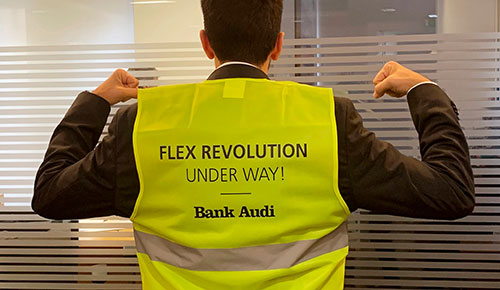 “A specific hotline
was created for each section depending on the type of work”,
Roula Obeid, PCFT Stream Lead, giving us remote access to
employee screens. Bank Audi’s command centre had more than
50 resources to be able to cover all the streams and provide live
support to branches.
“These resources were shadowing the branches, providing support and accessing their systems remotely in order to help them run everything smoothly”, Jihad Hichi, Business Manager.
As the first day of FLEXCUBE got closer, all employees were eager to get the system working and start executing client transactions. They were ready to face any problem that might come their way. Having sat for intensive training sessions during weeks before the D-Day, confidence prevailed. Witnessing the move to a new core banking system on such a large scale is a once-in-a-lifetime experience. From the start of the project, employees showed immense dedication and professionalism to the tasks. The enthusiasm of all was what made this project a success. “I want to emphasise that Bank Audi employees showed an utmost level of commitment, dedication and motivation”, Mahmoud Kurdy, Country CFO.
At the Contact Centre, shifts were doubled. “We created an outbound team to call back clients that we could not reach”, Roula Chartouny, Team Leader.
“On the marketing front, in order to keep customers well informed and to prepare them for the migration, the Bank developed a communication plan that was rolled out mid-December across various channels and platforms”, Jad Ibrahim, Communication Lead.
“The team performed outstandingly well. They really embraced the project. They knew what to expect, what to plan for, and where the weaknesses and strengths were in the system”, Katerina Nikolaou.
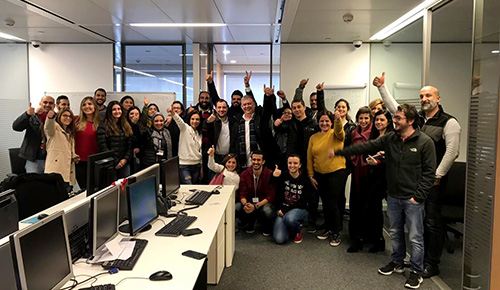
“The professionalism I witnessed during the entire process is up to international standards. Hats-off to everyone. This is a major milestone”, Alain Nohra, Levant Technology Country Manager – Oracle. A small celebration took place, during which Management congratulated the employees on a job well done.
“We did not only implement a system. We implemented a way of life and a way of work at the Bank”, Toufic Arida, Assistant COO and Head of Transformation Office.
“We have reached our last milestone and channels migrated to FLEXCUBE smoothly. These last few weeks were intense, yet rewarding. We went live with our branches and customers as planned. This was a smooth experience and customers were barely affected, which was our objective to start with”, Fady Obeid, Assistant Chief Operating Officer.
Hassan Saleh, Chief Operating Officer, addressed the concerned teams saying: “After 20 years, we are changing our core banking system. We would not have reached this stage in such a professional way without your efforts and teamwork. We thank you all for your hard work throughout the entire process.”
Marc Audi concluded: “At Bank Audi, we are used to success. We kept that pace and completed the migration on time. We even exceeded our own expectations.” He went on by relaying the message of Chairman and Group CEO Samir Hanna who was keen on congratulating and thanking employees for their perseverance and dedication.
“One of the early challenges was adapting to Oracle FLEXCUBE and not replicating our old system”, Dalia Tohme, Senior Change Manager – Transformation Program Office.
“The customer experience always comes first. However, the system should not disrupt the operational aspect of the Bank’s branches”, Dania Abou Zeinab, CASA-TD Stream Lead.
In order to transfer and load the Bank’s data onto the new system, a technical infrastructure environment needed preparation. A rollout process was carried out based on a well-thought-out plan where every person knew their duty and the precise timing of fulfilling their tasks. “Banks usually make changes step by step. In this case, Bank Audi wanted the transition to happen altogether. In fact, the Bank created a transformation office that helped bring all the various components together”, Katerina Nikolaou, Senior Consulting Director – Oracle.
To make it happen, there is more to the new system than meets the eye. “People tend to concentrate on the core but the satellites involved should not be out of thought. There are 32 satellites or applications with more than 20 vendors involved in the process.
In addition, there are over 180 integrations. These tools demonstrate the holistic solutions that this core banking system offers”, Tohme.
“All the existing rules and processes of Customer On-Boarding (COB) had to be well aligned upon migration to the new core, and the logic of the old core was converted and translated into FLEXCUBE to ensure zero impact on all satellites and modules that read from the Customer Information Screens”, Nathalie Al-Akoum – COB Stream Lead.
The challenge was to stick to the plan. The entire process was like a puzzle to put together. For example, when a developer finished his part, the satellite team took the work and started the conversion related to the section. The difficulty of a core banking system transformation is that there are no compromises.
“We went through many stages, tests, trials and business simulations as if we were going live and checked the migration with the branches”, Chadi Morad, Migration Lead.
“From a training perspective, the objective was to trigger a positive user adoption. The Bank needed employees to be at ease with the system once it goes live”, Itidal Saad, Training Lead. “A full rehearsal was added to the testing environments, to highlight in advance glitches in the operations, which the team made sure to fix at each stage. We gave more than 1,700 hours of training to make sure the operations in the branches run smoothly during the go-live day”, Johnny Abou Jaoude, RT Stream Lead
Different business simulations were made in coordination with all branches, during which all employees had to redo their normal daily operations on FLEXCUBE in such a way as to get as close as possible to real scenarios. “We had to ensure that all the loan processes are well structured for a thorough credit analysis and user friendly to avoid complexities and proceed with an automatic loan booking on core”, Aline Abou-Saab – Newgen RLOS Lead.
“We kept the ID and serial number of our clients’ current accounts. However, we had to change the numbers of the loans, for instance. Each loan was given a new contract number. So most of the client-related operations remained the same after the shift. As such, client-facing employees would be walking their customers through the changes when and where applicable”, Julia Moufarrej – Lending Stream Lea.d
The aim was to make sure that we were reaching every target while abiding by the specific regulations of the Lebanese market practice. “The main goal was to finish on time and meet all the expectations for the opening date”, Jimmy Badawy – Roll Out Project Manager, and Mira El-Hayek – Migration Project Manager. Everybody was working around the clock to place the final touches before migration.
“Our main task was to finalise the requests that we were receiving from business users. They had to be be ready in order to kick off the end-of-year process and start the migration to FLEXCUBE”, Charbel Habboub, Domain Head Core Banking.
December 29, 2018 was the last day employees worked on the old system. “This meant that we had to finalise all our operations before moving to the new system”, Rita El-Khoury, Head of Central Operations. After finalising the end-of year report, migration of the data had to be launched. This was a very clean start for the books, the systems, and even for customers. “We had to be ready for December 31 in the afternoon to launch the first sanity test at the Bab Idriss branch”, Marcelle Attar, Head of Information Technology.
“All the hard work we had done during 3 years had paid off!”, Dania Abou Zeinab. Confirming the migration phase, the Finance Department was able to make sure that the data and trial balance were ready.
“Our success pillars in the migration process were the multi-focal point approach, a structured financial reconciliation, secured customer account balance migration, coordinated plans among IT and the business teams, and dedicated support to network colleagues. Financial reconciliation was in accordance with the migration strategy which, in turn, made the migration process smooth”, Noura Amja, Finance Stream Lead.
“The end-of-year process had ended and, starting 5 am, all ATMs and debit cards would go offline in order for satellites to start the conversions in parallel with the migration”, Elie Harfouch, Integration Lead.
“Our debit and credit card systems needed to be converted in such a way as to speak the language of the new core banking system”, Walid Mneimneh, Cards Stream Lead.
“We worked closely with the technical, business and communication teams in order to provide the most seamless migration to our alternative delivery channels”, Wadih Tohme, Omni Channels Stream Lead, and Omar El-Zein, ATM Stream Lead.
After much anticipation, the time to go live with FLEXCUBE had come!
Switching to FLEXCUBE
A special room was prepared in order to keep operations
running at all times without any glitches. The space was divided
into streams where each employee gave a precise kind of
support to a specific module and application.
“These resources were shadowing the branches, providing support and accessing their systems remotely in order to help them run everything smoothly”, Jihad Hichi, Business Manager.
As the first day of FLEXCUBE got closer, all employees were eager to get the system working and start executing client transactions. They were ready to face any problem that might come their way. Having sat for intensive training sessions during weeks before the D-Day, confidence prevailed. Witnessing the move to a new core banking system on such a large scale is a once-in-a-lifetime experience. From the start of the project, employees showed immense dedication and professionalism to the tasks. The enthusiasm of all was what made this project a success. “I want to emphasise that Bank Audi employees showed an utmost level of commitment, dedication and motivation”, Mahmoud Kurdy, Country CFO.
At the Contact Centre, shifts were doubled. “We created an outbound team to call back clients that we could not reach”, Roula Chartouny, Team Leader.
“On the marketing front, in order to keep customers well informed and to prepare them for the migration, the Bank developed a communication plan that was rolled out mid-December across various channels and platforms”, Jad Ibrahim, Communication Lead.
“The team performed outstandingly well. They really embraced the project. They knew what to expect, what to plan for, and where the weaknesses and strengths were in the system”, Katerina Nikolaou.
“The professionalism I witnessed during the entire process is up to international standards. Hats-off to everyone. This is a major milestone”, Alain Nohra, Levant Technology Country Manager – Oracle. A small celebration took place, during which Management congratulated the employees on a job well done.
“We did not only implement a system. We implemented a way of life and a way of work at the Bank”, Toufic Arida, Assistant COO and Head of Transformation Office.
“We have reached our last milestone and channels migrated to FLEXCUBE smoothly. These last few weeks were intense, yet rewarding. We went live with our branches and customers as planned. This was a smooth experience and customers were barely affected, which was our objective to start with”, Fady Obeid, Assistant Chief Operating Officer.
Hassan Saleh, Chief Operating Officer, addressed the concerned teams saying: “After 20 years, we are changing our core banking system. We would not have reached this stage in such a professional way without your efforts and teamwork. We thank you all for your hard work throughout the entire process.”
Marc Audi concluded: “At Bank Audi, we are used to success. We kept that pace and completed the migration on time. We even exceeded our own expectations.” He went on by relaying the message of Chairman and Group CEO Samir Hanna who was keen on congratulating and thanking employees for their perseverance and dedication.
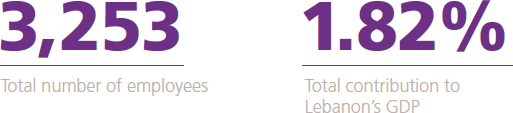
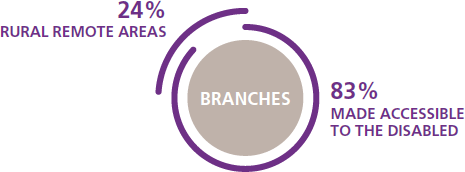
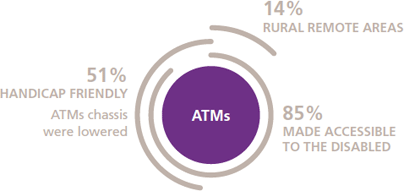

The disclosed information is relevant for the period ending 2020
Download our app